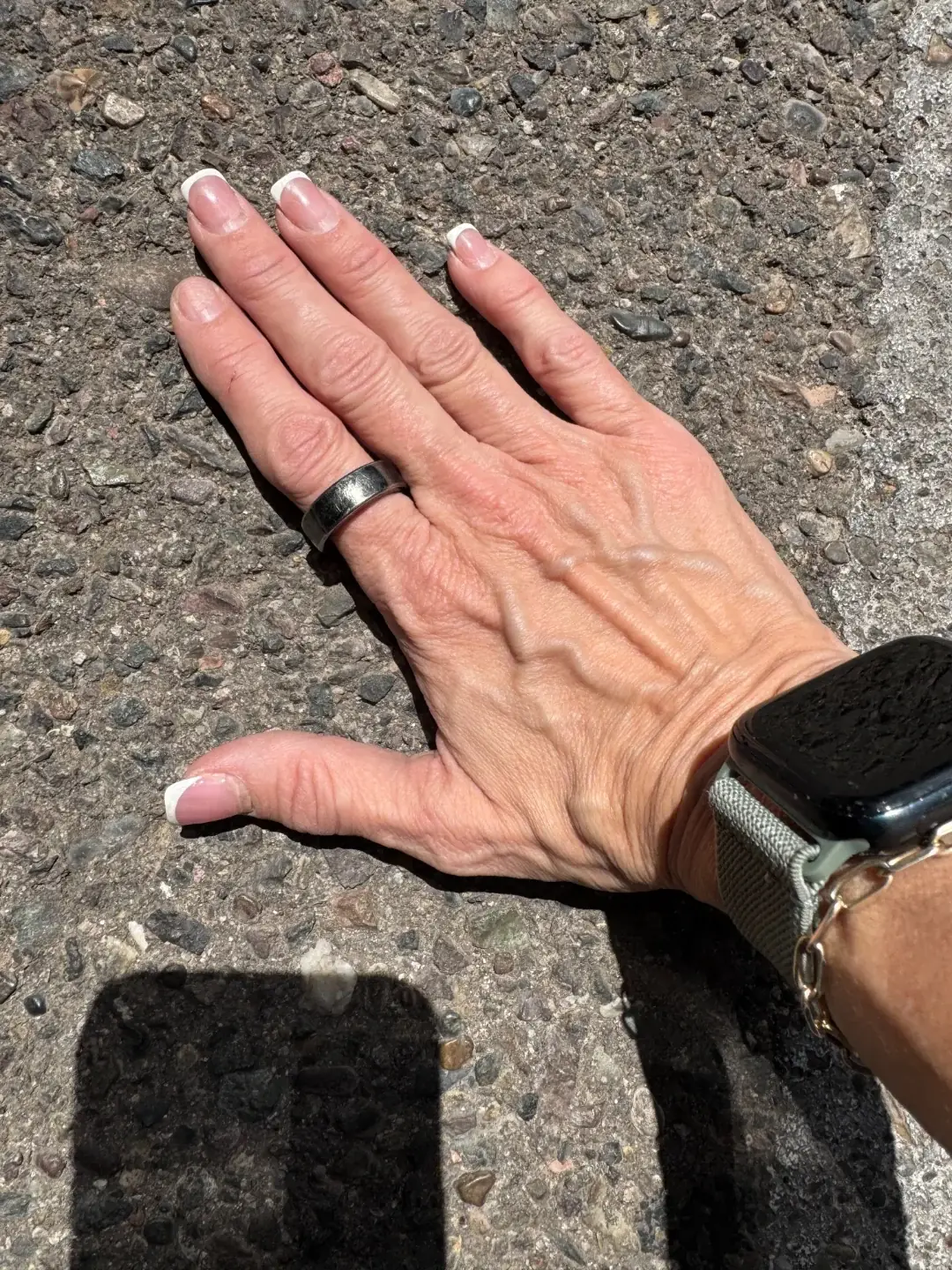
For dogs, the air temperature and the pavement temperature don’t always tell the same story. Before a walk, pause at the pavement. Then look beyond it.
A quick check, not an all-clear.
If the ground is too hot to hold the back of your hand on it for five seconds, it is too hot for paws, according to the RSPCA’s summer guidance (opens in a new tab). This is a warning check, not proof that a walk is safe.
The original Thrive Vibes article described a seven-second version. Different organizations use different durations; the important point is to avoid hot surfaces, not to treat a stopwatch as a safety guarantee.
Think about the whole dog.
Flat-faced dogs, including French bulldogs and pugs, are particularly vulnerable to heatstroke, so extra care is needed in hot weather. See the RSPCA’s advice for flat-faced dogs (opens in a new tab).
Temperature, humidity, exertion, your dog’s health, and access to a cool place all belong in the decision. If conditions are unsuitable, skip the outing and choose time together indoors.
The plan can change. That’s the point.
- Check the actual conditions, not just the clock.
- Confirm indoor access before leaving home.
- Bring water and a bowl, and keep the trip easy to abandon.
- Don’t treat booties, shade, or a short walk as permission to ignore heat.
- Never leave a dog in a parked vehicle, even briefly.
For more on avoiding hot surfaces, choosing cooler times, and preventing heatstroke, read the RSPCA heatstroke guidance (opens in a new tab).
A better default.
Our recommendation is simple: plan for your dog’s comfort, and give yourself permission to stay home. An uneventful day together is a good day.
Educational information, not an individual veterinary assessment. Adapted from the original Thrive Vibes pavement article (opens in a new tab); emergency and heat-safety wording has been revised.