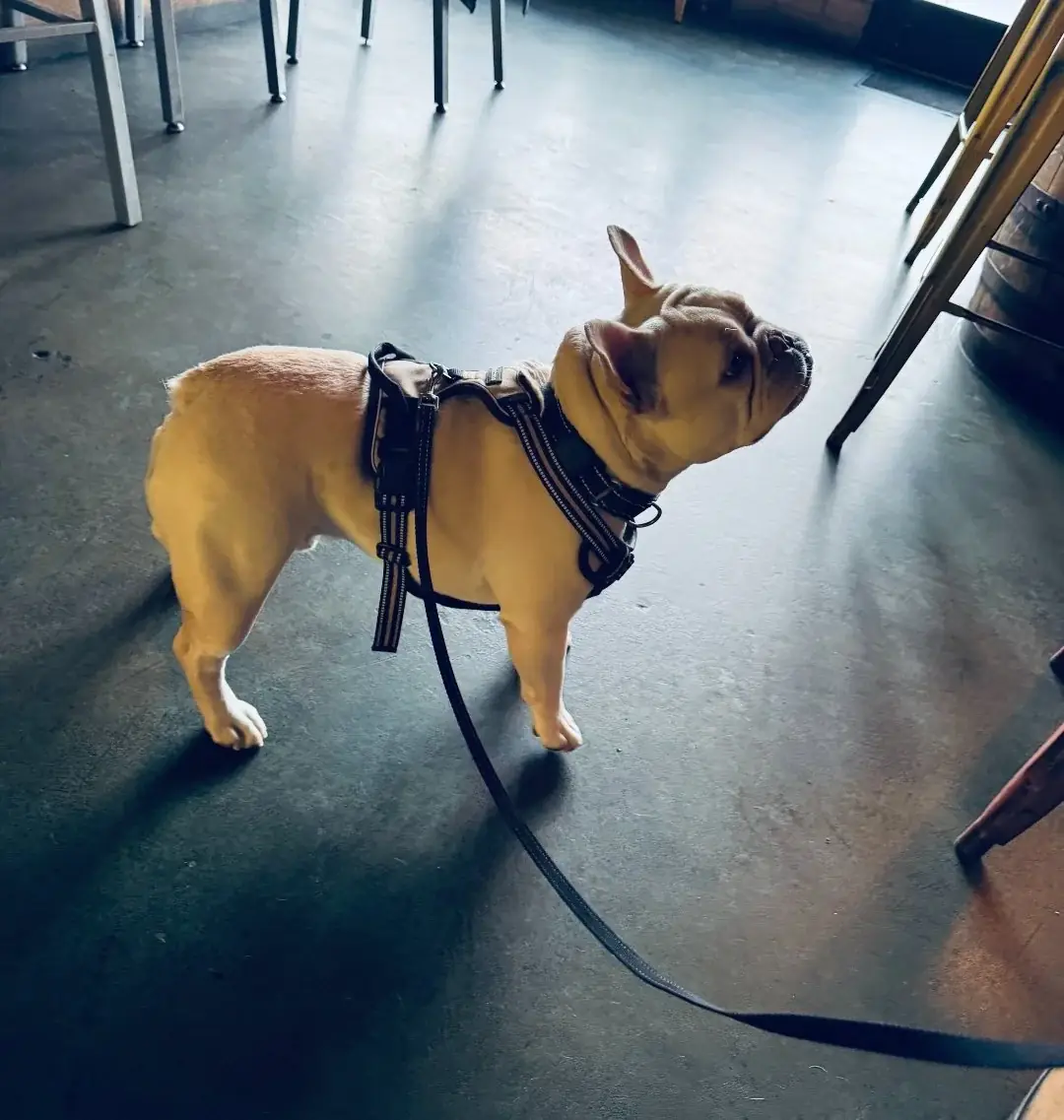
Hot cars get the warnings, and they deserve them. In UK veterinary records, exercise was behind most heatstroke in dogs, and flat-faced breeds were among the most at risk. In Arizona, that makes the daily walk the decision worth planning.
What the records show.
Researchers at the Royal Veterinary College’s VetCompass program studied the records of 905,543 dogs seen by UK veterinarians in 2016. About 1 in 7 dogs treated for heat-related illness died (14%). [2]
In a related study by the same team, exercise triggered 74% of heat-related illness. Hot weather alone accounted for 13%, and hot cars for 5%. [1]
Compared with Labrador retrievers, the odds of heat-related illness were about 14 times higher for bulldogs, 6.5 times higher for French bulldogs, and 3.2 times higher for pugs. Flat-faced (brachycephalic) dogs overall had about twice the odds of dogs with medium-length muzzles. Dogs heavier than average for their breed, and dogs aged 12 and over, also had higher odds. [2]
These figures come from the UK, where summers are milder than ours. The pattern is the useful part: exercise in the heat matters most.
Why flat faces have a harder time.
Dogs cool themselves mainly by panting, and flat-faced dogs can’t pant as effectively because of their shorter snouts. [3] Veterinary Partner explains that the extra work of moving air can make the airway swell, which narrows it further and adds to the overheating. [4]
Plan the walk around the dog.
- Walk at the coolest time of day, and skip the walk in peak heat. [5]
- Keep it steady. A regular routine of steady exercise suits flat-faced dogs better than strenuous bursts. [5]
- Use a harness rather than a collar, so there’s no pressure on the neck. [5]
- Check the ground. If you can’t hold the back of your hand on it for five seconds, it’s too hot for paws. [6] More in the pavement test.
- Know the local rule: dogs are not allowed on City of Phoenix hiking trails at 100°F or warmer. [7]
- Keep an eye on weight. Extra weight adds stress to breathing, and heavier dogs had higher odds of heat-related illness. [5][2]
- Learn your dog’s normal breathing sounds at rest, so you notice when they change. [4]
Signs of heatstroke.
The RSPCA lists signs including heavy panting, noisy breathing, drooling, red gums and tongue, confusion, vomiting or diarrhea, weakness, seizures, and collapse. [3]
Cool first, transport second.
If you suspect heatstroke, start cooling right away, then get to a veterinarian. The Royal Veterinary College’s guidance, based on its study of cooling methods: use whatever water you have, as long as it is cooler than your dog. Pour it over them and keep air moving with a breeze, a fan, or air conditioning. Cold-water immersion is an option for young, healthy dogs. Call the vet on the way. [8][3]
The same guidance says older advice to cool dogs slowly with tepid water is not supported by evidence. [8]
A better default.
On a hot day, the walk can wait. An early sniff around the yard and an afternoon nap somewhere cool make a good day for a flat-faced dog.
Educational information, not an individual veterinary assessment. Keep the month-by-month version on your fridge: the Arizona dog safety calendar.
Sources
- Hall EJ, Carter AJ, O’Neill DG. Dogs don’t die just in hot cars: exertional heat-related illness (heatstroke) is a greater threat to UK dogs. Animals, 2020. doi.org/10.3390/ani10081324 (opens in a new tab)
- Hall EJ, Carter AJ, O’Neill DG. Incidence and risk factors for heat-related illness (heatstroke) in UK dogs under primary veterinary care in 2016. Scientific Reports, 2020. www.nature.com/articles/s41598-020-66015-8 (opens in a new tab)
- RSPCA. Heatstroke in dogs. www.rspca.org.uk/adviceandwelfare/pets/dogs/health/heatstroke (opens in a new tab)
- Veterinary Partner (VIN). Brachycephalic airway obstruction syndrome in flat-faced dogs. veterinarypartner.vin.com/default.aspx?pid=19239&id=4951534 (opens in a new tab)
- RSPCA. How to care for dogs with brachycephaly. www.rspca.org.uk/adviceandwelfare/pets/genetics/caring/dogs (opens in a new tab)
- RSPCA. Dogs in hot weather. www.rspca.org.uk/adviceandwelfare/seasonal/summer/dogs (opens in a new tab)
- City of Phoenix. Heat safety. www.phoenix.gov/administration/departments/heat/heat-response-programs/heat-safety.html (opens in a new tab)
- Royal Veterinary College. The RVC urges owners of hot dogs to “cool first, transport second.” July 2023. www.rvc.ac.uk/vetcompass/news/the-rvc-urges-owners-of-hot-dogs-to-cool-first-transport-second (opens in a new tab)
KEEP READING