The short answer
Yes. Plain cooked turkey meat, off the bone, with no skin and nothing on it, is fine for most dogs in small amounts.
Almost everything that goes wrong on Thanksgiving comes from the parts around the meat: the bones, the skin, the gravy, the brine and the stuffing. And from a dog who spends the whole day eating things they never normally eat.
If you take one thing from this page, make it this: put the trash can out of reach.
Touch to sort
The Thanksgiving plate
Eight things that will be within reach of your dog on Thursday. Tap any one to see where it belongs, and why.
What the research says about fat and pancreatitis
You will read on almost every other page that fatty food causes pancreatitis in dogs. The truth is more interesting than that, and more useful.
A 2026 review in the Journal of the American Veterinary Medical Association went back through the evidence linking dietary fat to pancreatitis and found that the older studies behind the idea used experimental models, small samples and diets that do not resemble what dogs eat now. More recent work has generally failed to confirm a straightforward link.
What the evidence does support is the holiday pattern itself. A case-control study of 385 dogs found that dogs who had eaten unusual food items, or table scraps, or had got into the trash, had higher odds of pancreatitis. Getting into the trash carried the highest odds of the three.
So the risk on Thursday is less about one slice of turkey breast, and more about a dog who spends the day eating things they do not normally eat and then finds the trash.
Five minutes, the morning of
What that means on the day
None of this is about watching your dog all day. It is about making the house safe once, early, so you can stop thinking about it.
Why the guests matter more than the menu. One person giving the dog a little of something is a small thing. Six people each doing that, without knowing the others did, is the day that gets described afterwards as "he only had a bit of turkey."
Call your vet if you see
- Repeated vomiting, or vomiting together with weakness
- A hunched back, or a belly that hurts to touch
- Refusing food, which in a dog who has just eaten a lot is worth taking seriously
- Any reason to think they swallowed bone
In a survey of 170 dogs with raised pancreatic lipase, the signs owners and vets reported most often were loss of appetite, diarrhea and vomiting. Pain was recorded far less often, which the authors attribute to how hard pain is to spot in a dog rather than to its absence. That is the argument for calling about the vomiting rather than waiting to see pain.
Two questions before Thursday
Answering beats re-reading. These two are the whole page.
Which is the bigger risk on the day?
The case-control evidence links unusual foods, table scraps and getting into the trash with higher odds of pancreatitis, and the trash carried the highest odds of the three. The plain slice is not the thing to plan around.
Onion and garlic powder, compared with a fresh onion?
Powdered and dried preparations are concentrated, which is why the stuffing and the rub matter more than most owners expect, and why "there was no actual onion in it" is not reassuring.
Keep your vet and a poison line one tap away
The worst time to look up a phone number is while you are watching your dog and trying to decide whether this is serious. Save your vet, your nearest emergency hospital and a poison line in one place now, before you need them.
Sources
- Yamka and others, 2026. High fat, high risk? Evaluating the strength of evidence linking dietary fat and pancreatitis in dogs. JAVMA. DOI 10.2460/javma.25.11.0773 Moderate, narrative review
- Lem and others, 2008. Associations between dietary factors and pancreatitis in dogs. JAVMA. Case-control, 198 cases and 187 controls. DOI 10.2460/javma.233.9.1425 Moderate
- Cridge, Scott and Steiner, 2022. Risk factors and clinical presentation in dogs with increased serum pancreatic lipase concentrations. Animals. 170 survey responses. DOI 10.3390/ani12121581 Moderate
- Cortinovis and Caloni, 2016. Household food items toxic to dogs and cats. Frontiers in Veterinary Science. DOI 10.3389/fvets.2016.00026 Review
- Salgado, Monteiro and Rocha, 2011. Allium species poisoning in dogs and cats. Journal of Venomous Animals and Toxins including Tropical Diseases. DOI 10.1590/s1678-91992011000100002 Review
Educational information, not an individual veterinary assessment.
Educational information, not an individual veterinary assessment. If you are worried about your dog, call your vet.
KEEP READING
WHEN YOUR DOG IS STAYING HOME
Care in Laveen.
Premium home-based daycare and boarding, with flat-faced dogs and lowriders (short-legged dogs) in mind. Other canine friends welcome.
@THEBOSSDOGCO
Follow along with the pack.
Field notes, days out, and Doug’s opinions, on Instagram, Facebook, and TikTok.
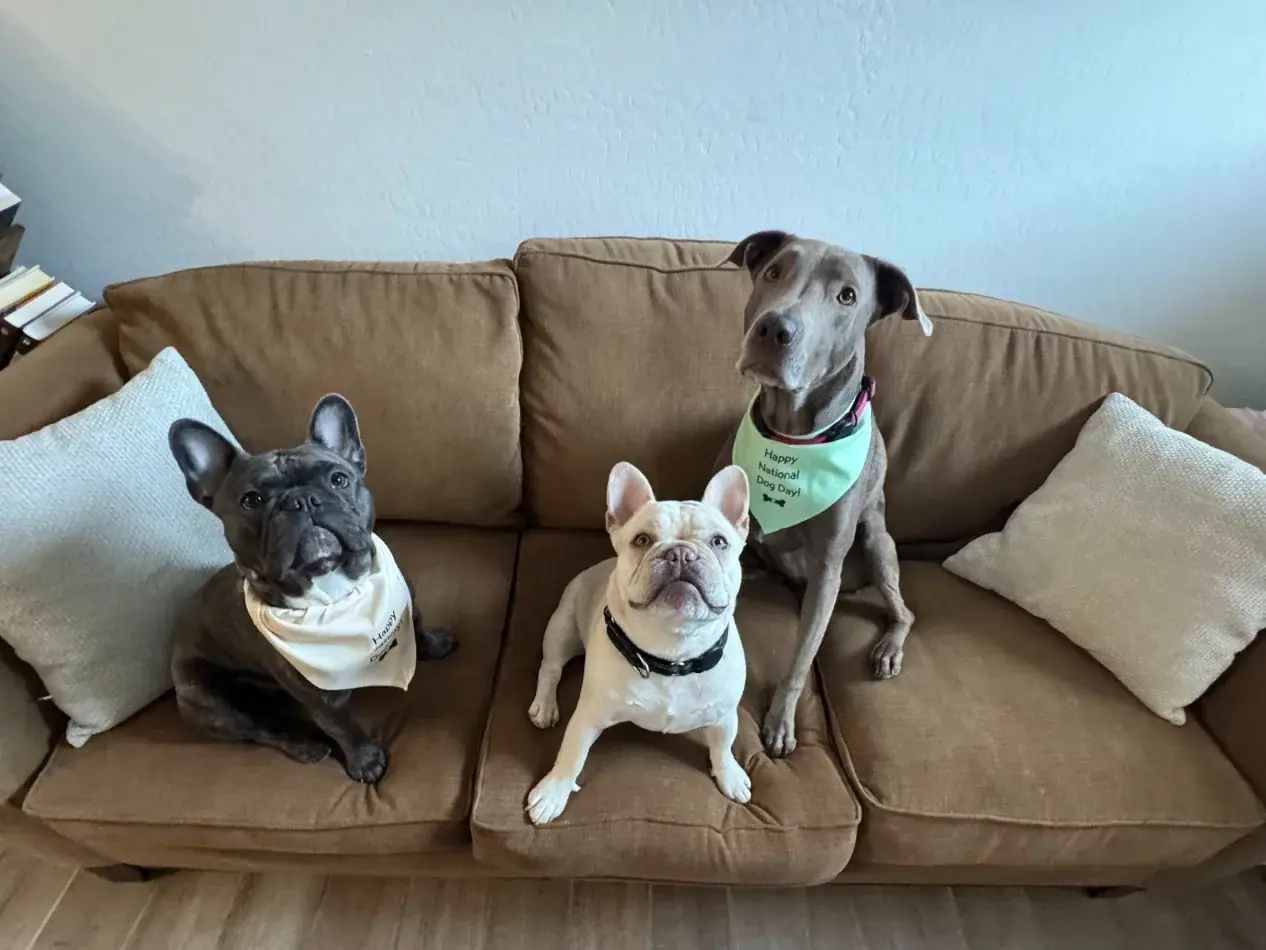 INSTAGRAMMeet the pack. Weekend jobs, assigned. Dex dribbles the ball, Doug supervises, Sky runs the place. (opens Instagram in a new tab)
- INSTAGRAMSafe or skip? Thanksgiving edition. Before anything from the table goes in a bowl, play the game. (opens Instagram in a new tab)
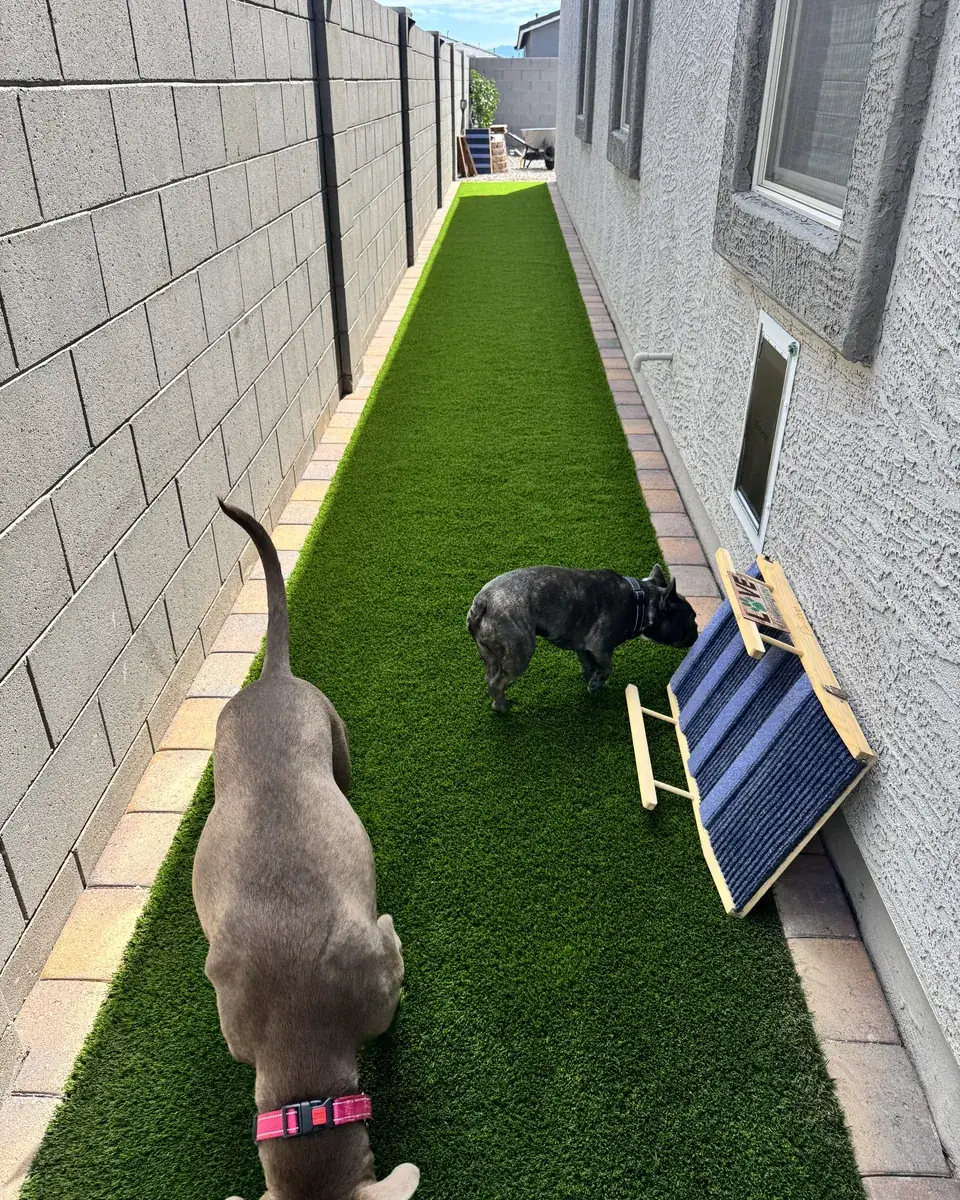 INSTAGRAMThe shaded run. Pet-rated turf, shade, and a ramp up to the dog door for short legs. (opens Instagram in a new tab)
- INSTAGRAMThank you, Greenwood. Six years of pup costumes at Greenwood Brewing, Downtown Phoenix. (opens Instagram in a new tab)
- INSTAGRAMThree ways to book. One conversation first. Request a stay directly, or find us on Rover and Wag. (opens Instagram in a new tab)
- INSTAGRAMDex as Roger Fetcherer. A tennis ball enthusiast, judging the big and small dog contest. (opens Instagram in a new tab)
- INSTAGRAMDinner is at 5:30. Doug, paws on a knee, waiting for dinner at 5:30 sharp. (opens Instagram in a new tab)
ONE EMAIL A MONTH
What to watch for,
before it matters.
A short note at the start of each month: what to watch for with your dog this month, one practical tip with its source, a short Arizona section for local readers, and new free guides when we publish them.
Educational information, not an individual veterinary assessment.